
A remarkable life is over. Blean Woods’ matriarch, the first Bison bonasus brought to the UK to live semi-wild outside of a zoo, died in November aged twenty-one. Her tenure served its purpose well. The matriarch provided three years of sound leadership and stability for the animals that followed.
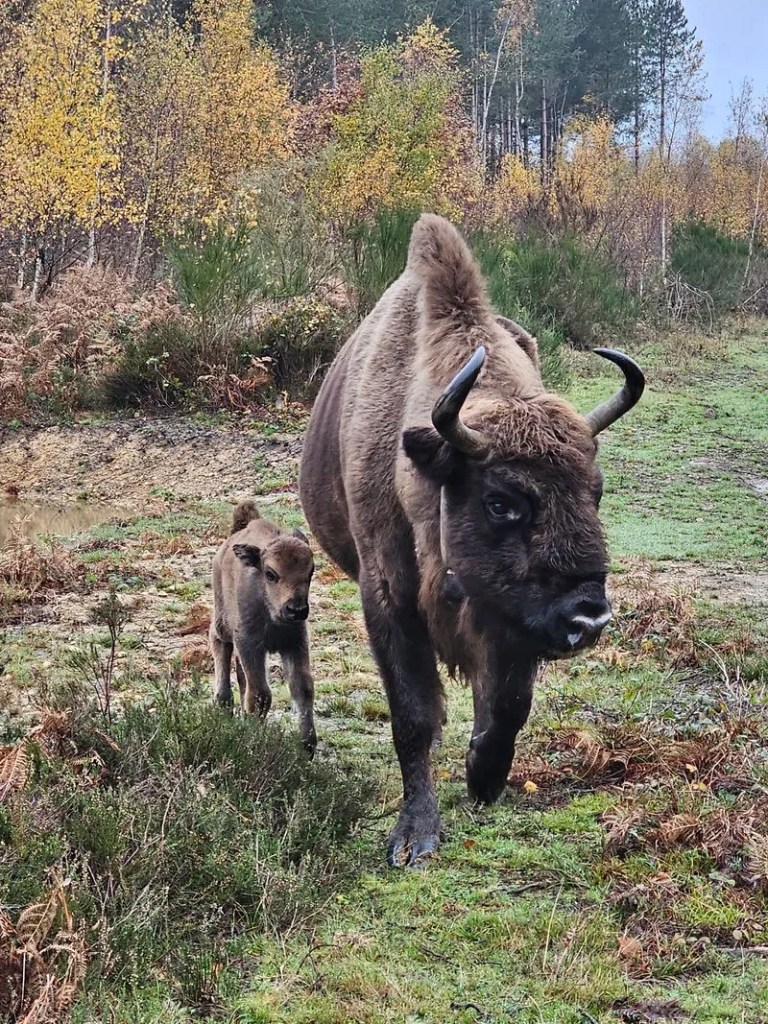
The bison rangers who manage the herd spoke highly of her influence. “When she led, they settled,” said bison ranger Donovan Wright. “When she paused, they listened.” She gave birth to the first calf conceived at the site in 2023 and helped guide it and three other youngsters as The Blean became their home. The growing herd is now well-established and exhibiting all the natural behaviors, including bark-stripping, browsing, and dust-bathing, that make European bison influential ‘ecosystem engineers.’
Her death from natural causes will allow another female to assume the leadership mantle. Seven calves have joined the herd in just three and a half years, including one born to a bison that was herself born at Blean. Three generations of bison in less than half a decade. Bison herds in good habitat in North America can increase their numbers by 10 -17% a year according to the US National Park Service. Nature recovery can happen fast if you give it a chance.
The restoration site is about to open two ‘bison bridges’ that will give the herd access to another hundred hectares of the ancient oak woodland. The bridges lift the footpaths that cross Blean Woods up and over key corridors between different sections of the preserve. Two more bridges are in the design phase and slated for construction in 2026.
The Blean site is a testbed for bison’s ability to perform woodland management. It has already shown how a large, native grazer can thin the timber, reduce non-native vegetation, and help create the habitat diversity that other species require. They have done all of this at the same time as helping with carbon sequestration by stimulating the growth of new vegetation. Eventually, the project hopes to export bison to other sites around the UK in need of natural regeneration.
So far, the Blean experiment has been a huge success. But as rewilding starts to mature in the UK, new questions will start to emerge. Will people and bison ever be allowed to walk in the same sections of woodland as they already are in parts of the Netherlands? Will bison carcasses be left on the land to decompose as they are at American Prairie in Eastern Montana? Will hunting surplus animals ever be permitted as it is on the borders of Yellowstone National Park? And, perhaps the question that shakes the UK more than any other, will large predators ever roam the same landscape as returning ungulates to keep the number of grazers in check?
The return of semi-wild bison to Kent has been a dramatic new step for conservation in the UK. It has inspired discussion of the return of large mammals in other parts of the country, including elk and lynx. Changing your relationship with animals can take decades. It must be done thoughtfully. In the Blean, Kent Wildlife Trust follows strict guidelines to stay within the permits issued for the bison experiment. They are well-aware of the need for caution.
There is no single playbook for animal restorations and recoveries. Rewilding takes different forms in different contexts. But with each new piece of ground covered, a new and exciting horizon opens up. Let’s hope the British public keep wondering what’s over the next hill.
 Christopher J. Preston
Wonderful adventure post—informative, exciting, and enjoyable to read.
LikeLike